
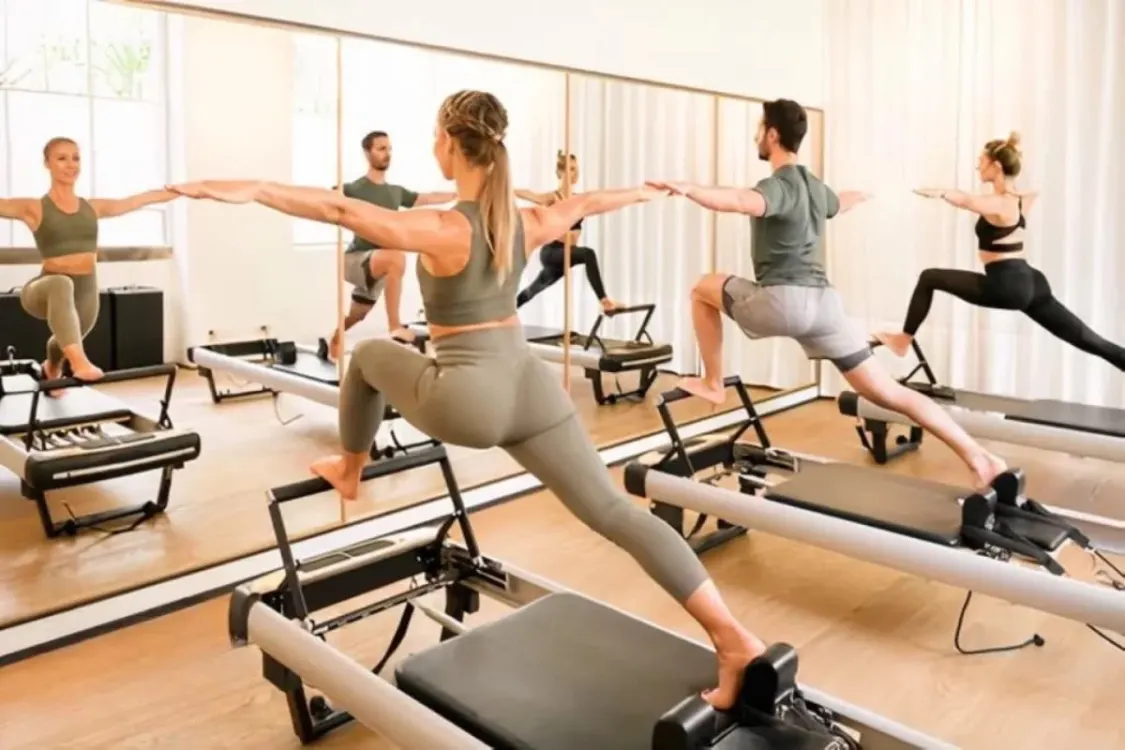
Reformer Pilates has grown rapidly in popularity, but with that popularity comes plenty of misconceptions. Many people are curious about trying it, yet hesitate because of things they have heard or assumed. In reality, Reformer Pilates is far more accessible, effective, and adaptable than many myths suggest. Below, we break down some of the most common misunderstandings and explain what Reformer Pilates is really about.
One of the biggest myths is that Reformer Pilates is only for advanced or very fit people. In truth, it is suitable for all ability levels. The reformer machine uses adjustable springs, allowing exercises to be modified for beginners or made more challenging for advanced clients. Instructors can personalise sessions to match individual needs, making it an excellent option whether you are new to exercise or highly experienced.
Another common misconception is that Reformer Pilates is easy or not a “real workout”. While movements are controlled and low-impact, they are incredibly effective. The resistance provided by the reformer challenges muscles in a precise way, helping to build strength, stability, and endurance. Many people are surprised by how demanding a session feels, particularly for the core and stabilising muscles.
Some believe Reformer Pilates is only about flexibility. While flexibility is an important benefit, it is just one part of the picture. Reformer Pilates focuses heavily on core strength, posture, balance, and controlled movement. Over time, this leads to improved functional strength, better alignment, and reduced risk of injury in everyday life.
There is also a myth that Reformer Pilates is only for women. In reality, it was originally developed by Joseph Pilates to help rehabilitate injured soldiers and athletes. Today, people of all genders benefit from Reformer Pilates, including runners, cyclists, footballers, and gym-goers looking to improve performance and prevent injuries.
Another misunderstanding is that Reformer Pilates is not suitable for people with injuries or back pain. When taught correctly, it is often recommended as a low-impact form of exercise for rehabilitation and recovery. The controlled movements and support provided by the reformer can help strengthen muscles safely, although it is always important to inform your instructor about any existing conditions.
Some people assume Reformer Pilates will not help with weight management. While it may not be a high-intensity cardio workout, it builds lean muscle, improves metabolism, and supports long-term body composition changes. Combined with a healthy lifestyle, it can be an effective part of a balanced fitness routine.
Reformer Pilates is also sometimes seen as intimidating because of the equipment. The reformer may look complex at first, but experienced instructors guide you through each movement, ensuring you feel confident and supported throughout the session. Most beginners find they become comfortable with the equipment very quickly.
At its core, Reformer Pilates is about controlled, mindful movement that delivers real results. By understanding the truth behind these myths, more people can feel confident exploring the benefits it offers. Studios such as CoreQuest Pilates continue to show how Reformer Pilates can be inclusive, effective, and suitable for a wide range of goals and abilities. Get in touch with us today to book your Reformer Pilates session.